url-shortener-system-design
URL Shortener System Design
Welcome to the documentation site for the URL Shortener System Design project.
This project explains how to design and implement a scalable URL shortener using:
- Reverse proxies
- API gateway
- Microservices
- Load balancing
- Caching with Redis
- Storage with Postgres
- Docker containerization
It follows modern system design best practices and includes diagrams, explanations, and a full Docker-based implementation.
📘 What You Will Learn
- How a URL shortener works internally
- How to design scalable microservices
- Why use reverse proxies, gateways, and internal load balancers
- How caching reduces database load
- How to containerize a distributed system using Docker
📐 Architecture Overview
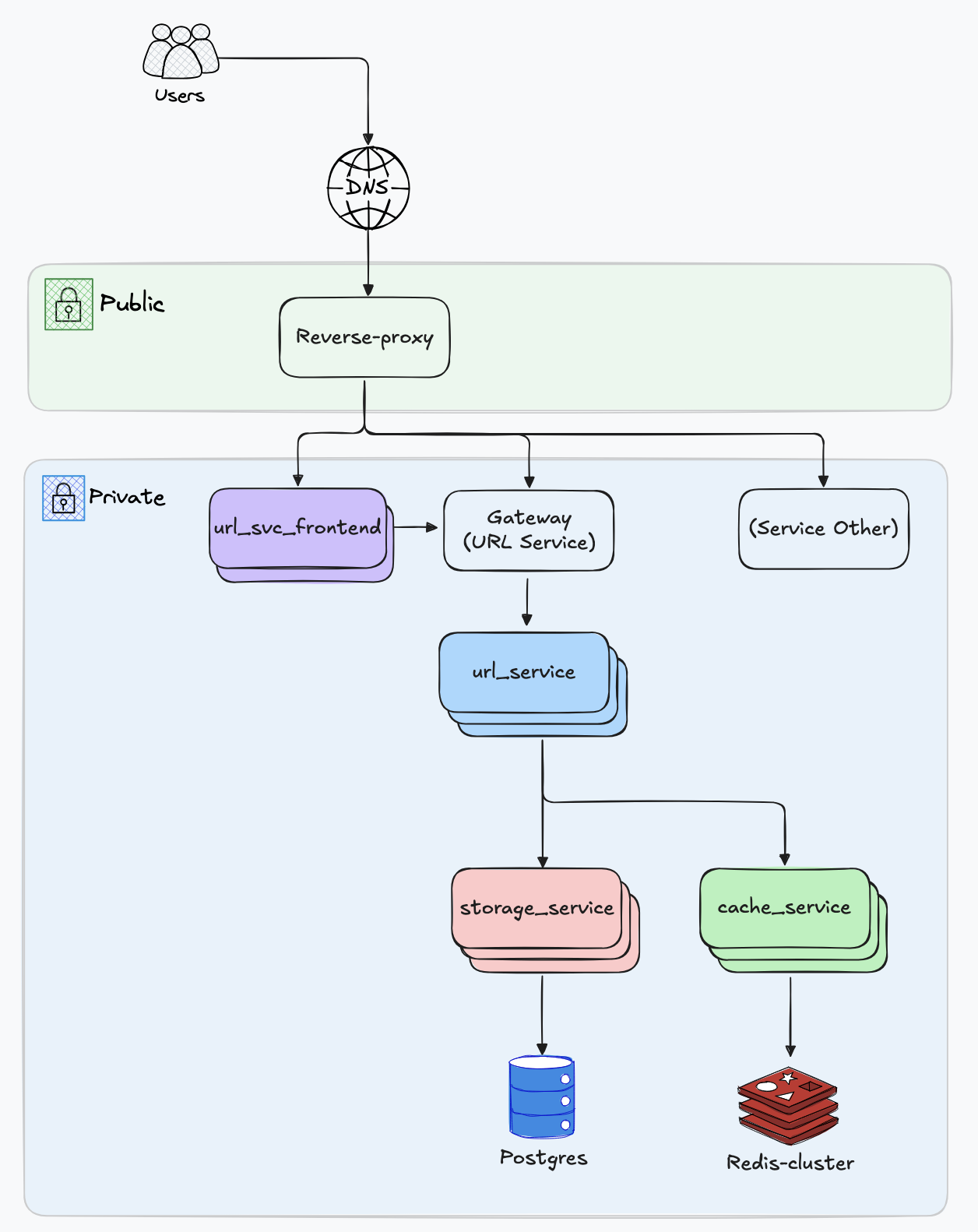
The system is divided into three main layers:
- Reverse Proxy Layer — Entry point for users
- Gateway Layer — Converts external HTTP/S into internal gRPC calls
- Service Layer — URL, storage, and cache services
- Data Layer — Postgres + Redis
Read the full breakdown in the Architecture page.
🚀 Implementation Overview
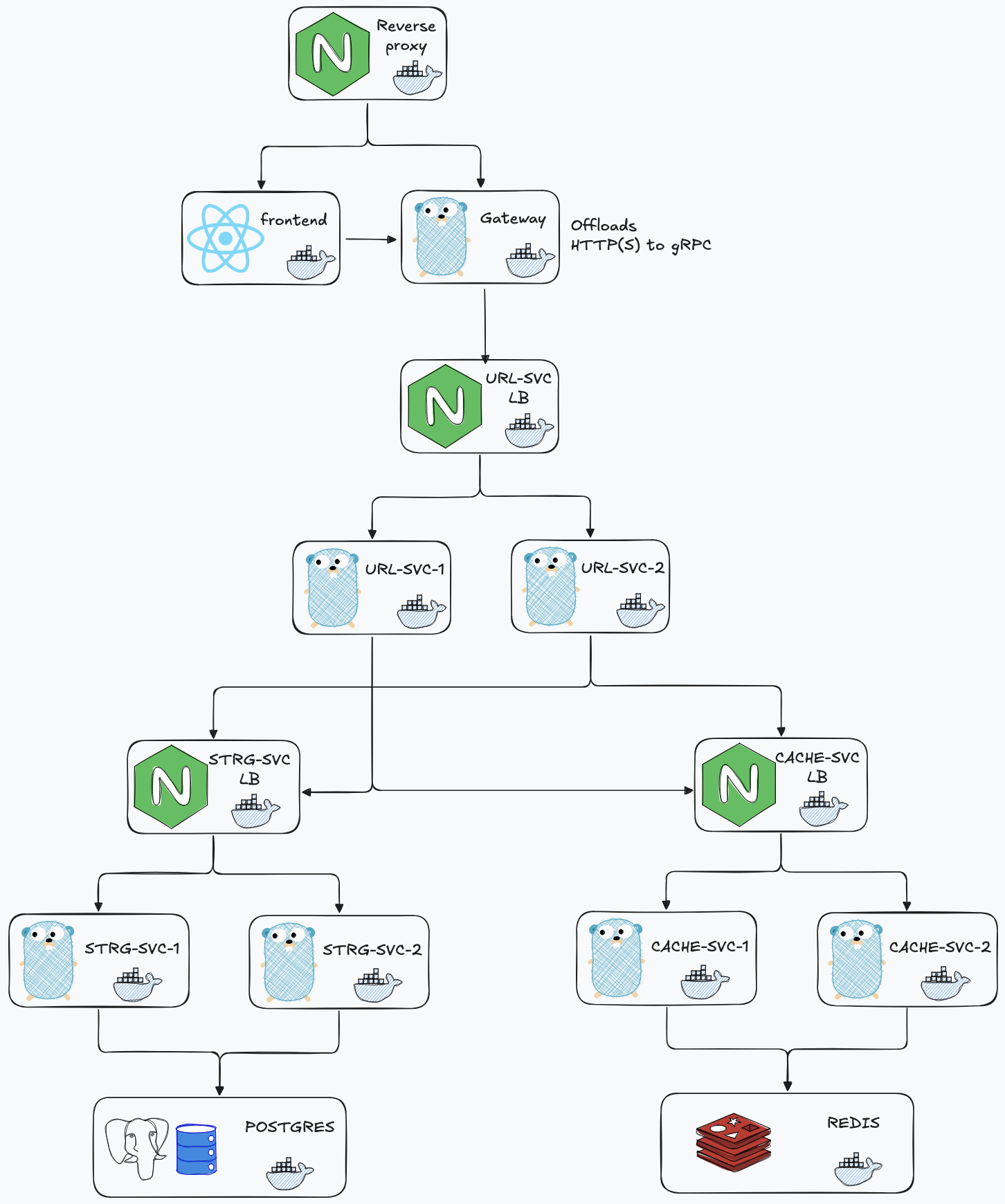
Each component is deployed as a Docker container:
- NGINX for reverse proxy & internal load balancers
- Go for URL logic, storage, and cache
- PostgreSQL container for persistence
- Redis for fast lookup
Read more in the Implementation page.
⭐ GitHub Repository
👉 View the source code on GitHub
🧭 Navigation
📄 License
MIT License